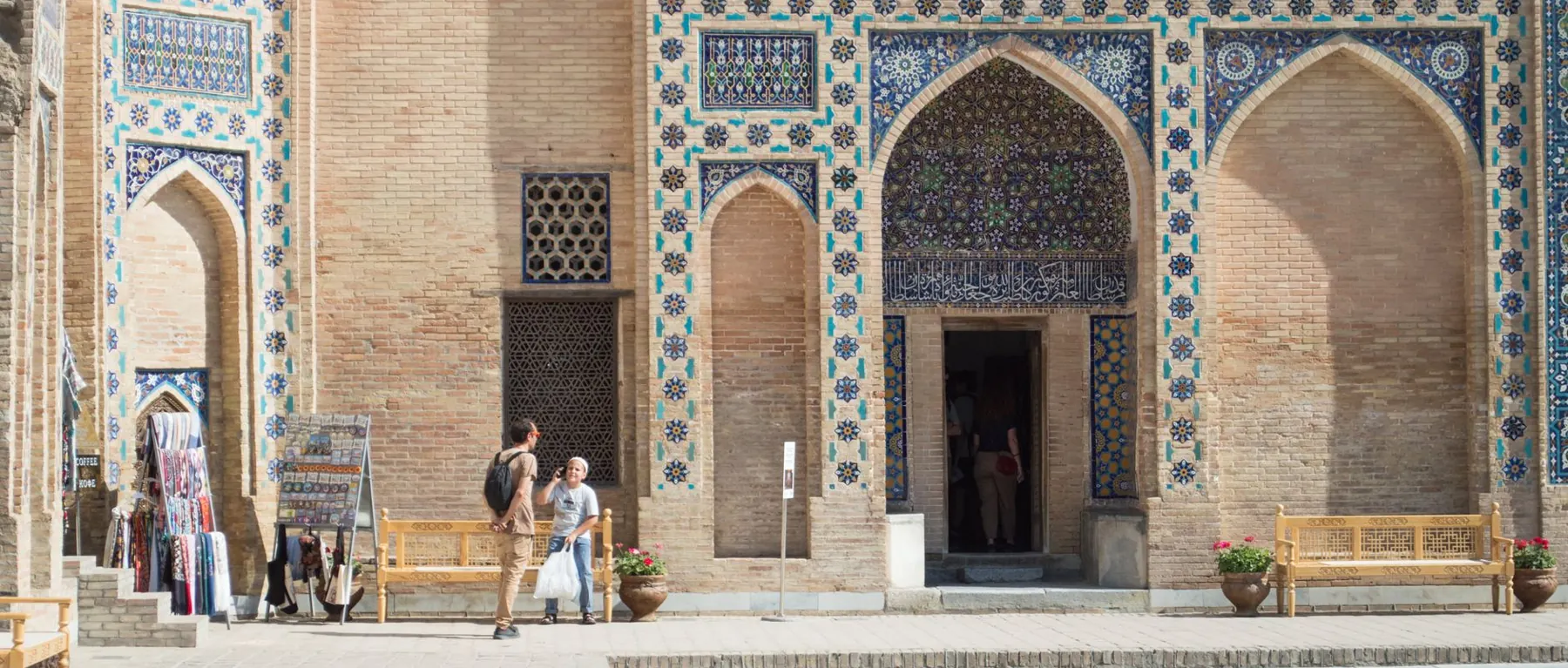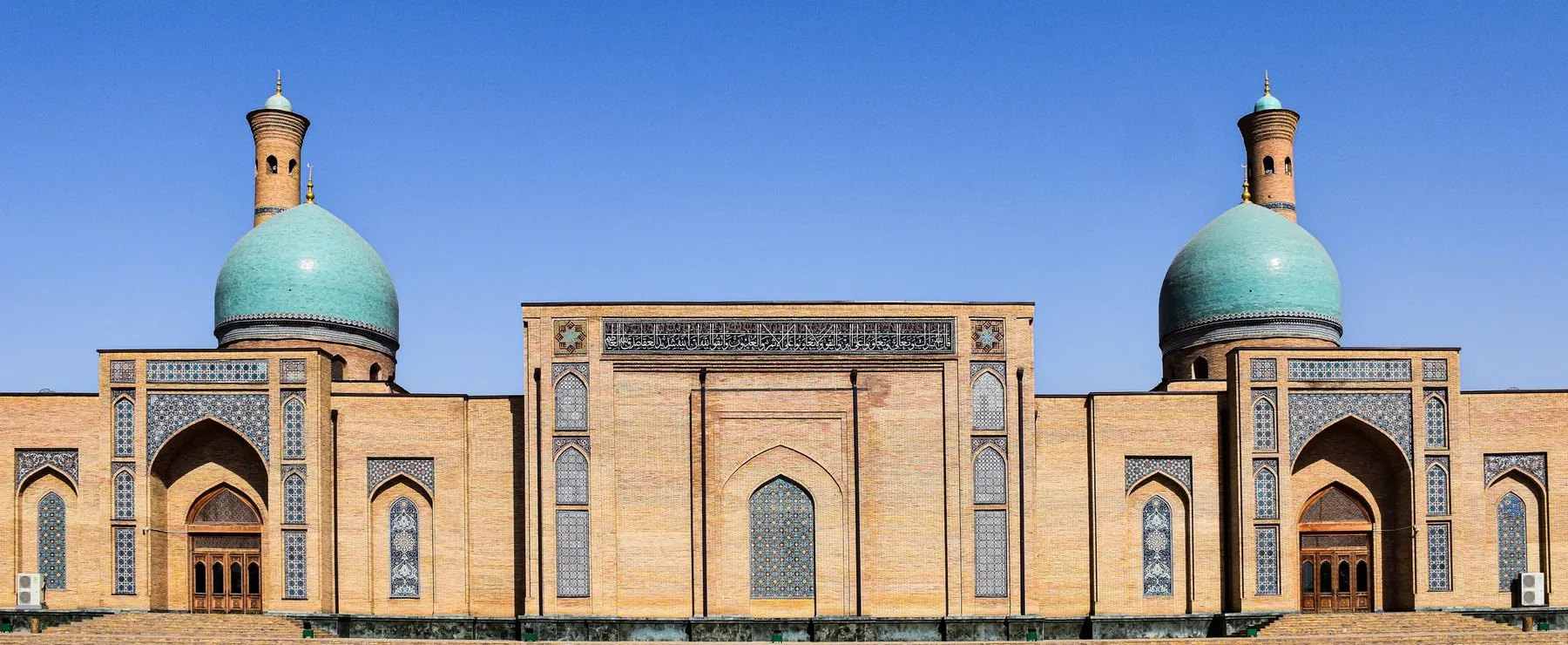
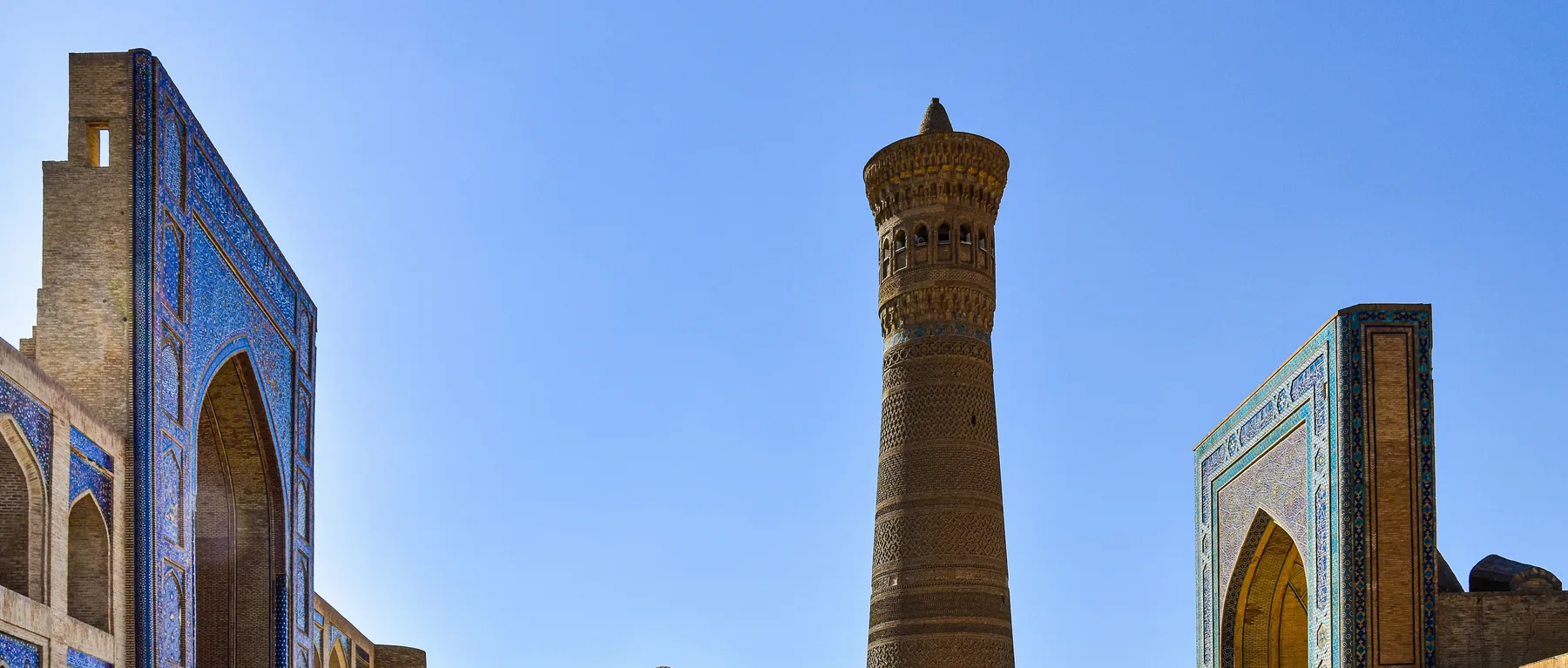
Start with the minaret’s brick patterns
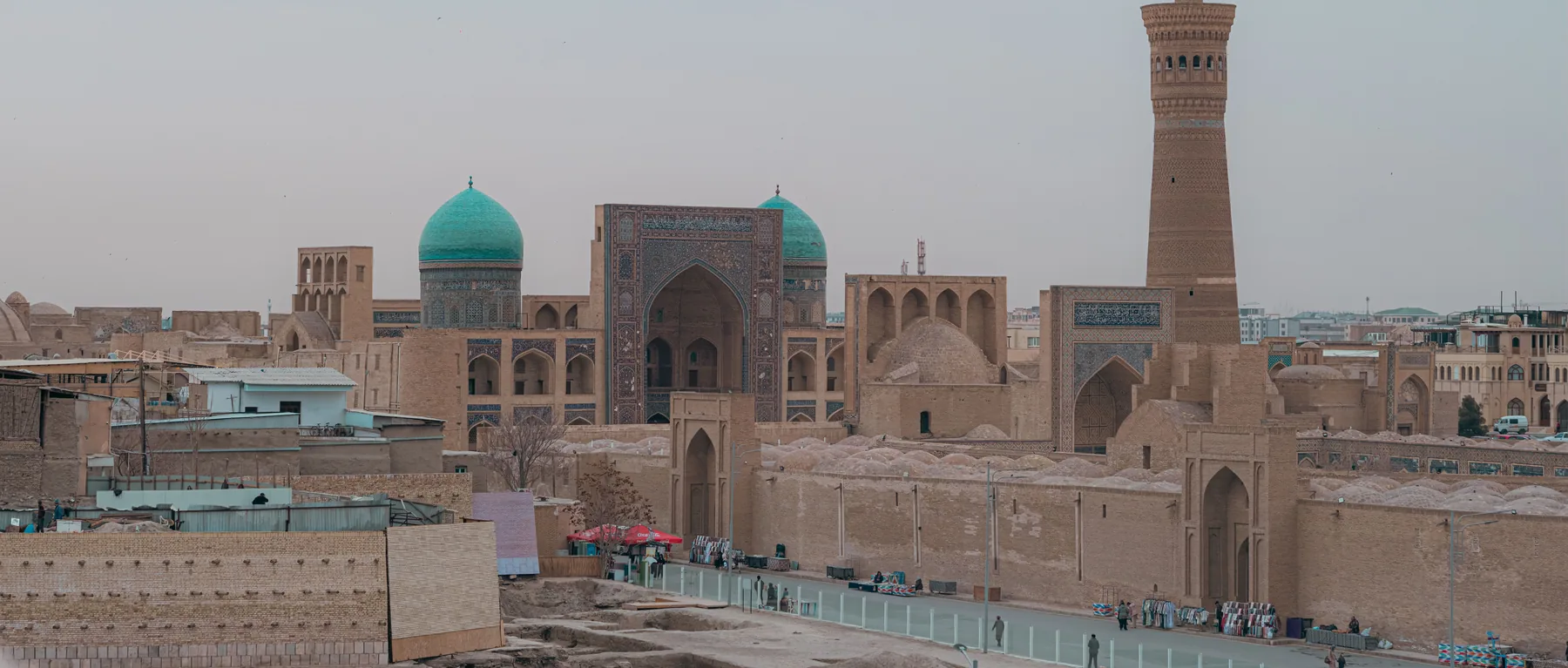
Find Kalon Minaret and begin from the open square, where you can see its tapering shape and changing bands of brickwork. Move between permitted public viewpoints to see how the relief catches the light; there is more to look at than the height of the tower.
The ensemble brings together buildings from different periods. Use the minaret as your point of orientation, then compare the scale of the mosque entrance and the madrasa opposite. Keep doorways clear and leave room for people crossing the square rather than blocking the approach for photographs.
Mobile data for your trip. Check what your current plan includes for roaming. If you need another option for maps, messages and booking details, compare NXTL eSIM coverage and rates. Check that your phone supports eSIM and is unlocked, and check coverage for every stop. Download important maps and confirmations for offline use too.
Give Kalyan Mosque its own visit
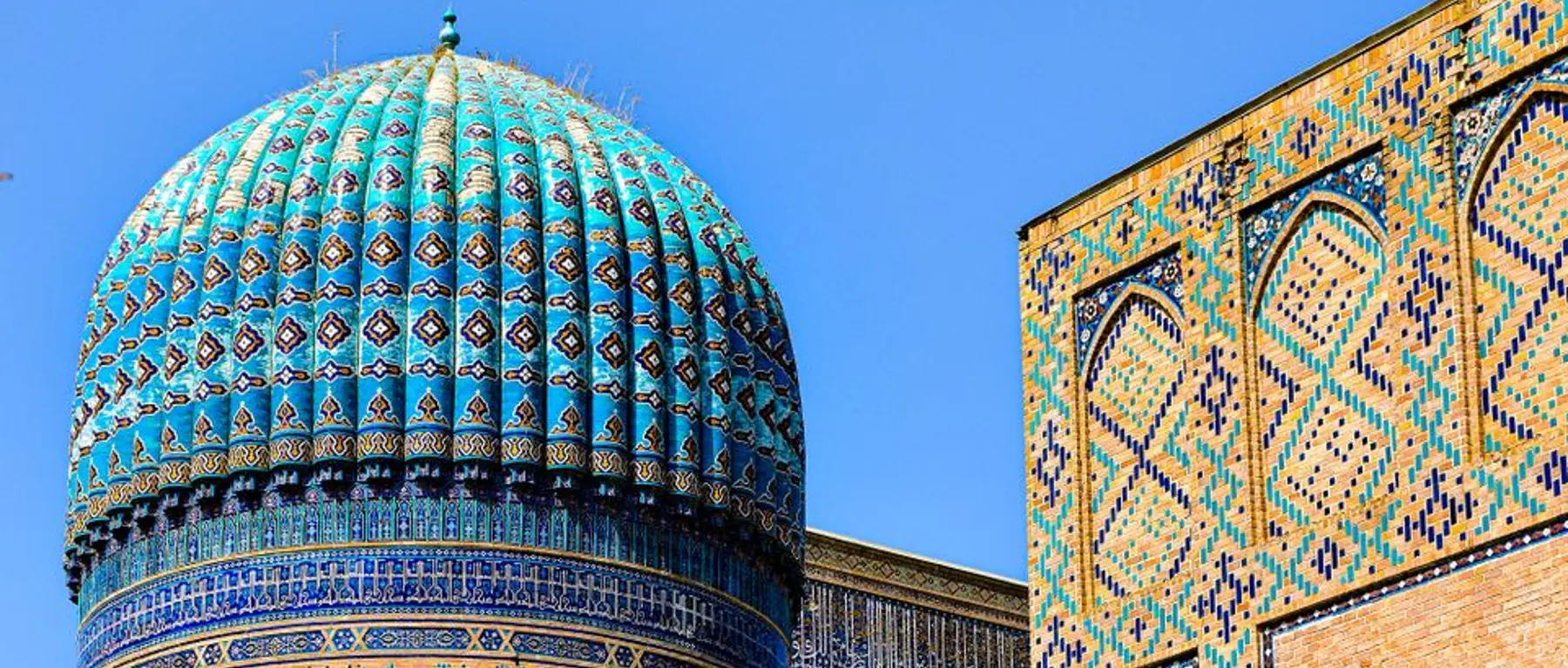
Ask at Kalyan Mosque about the current visitor entrance and admission. When the courtyard is open to visitors, look at the rhythm of its surrounding arcades and the turquoise dome above the far end. Pause away from the main flow rather than rushing straight across.
Cover shoulders and knees, bring a scarf if required and follow instructions about shoes, photography and prayer areas. A ticket does not give access to every door or religious space. If visiting is temporarily restricted, use the public square for exterior views and move to the paired madrasahs near Toqi Zargaron instead.
View Miri Arab from the public side
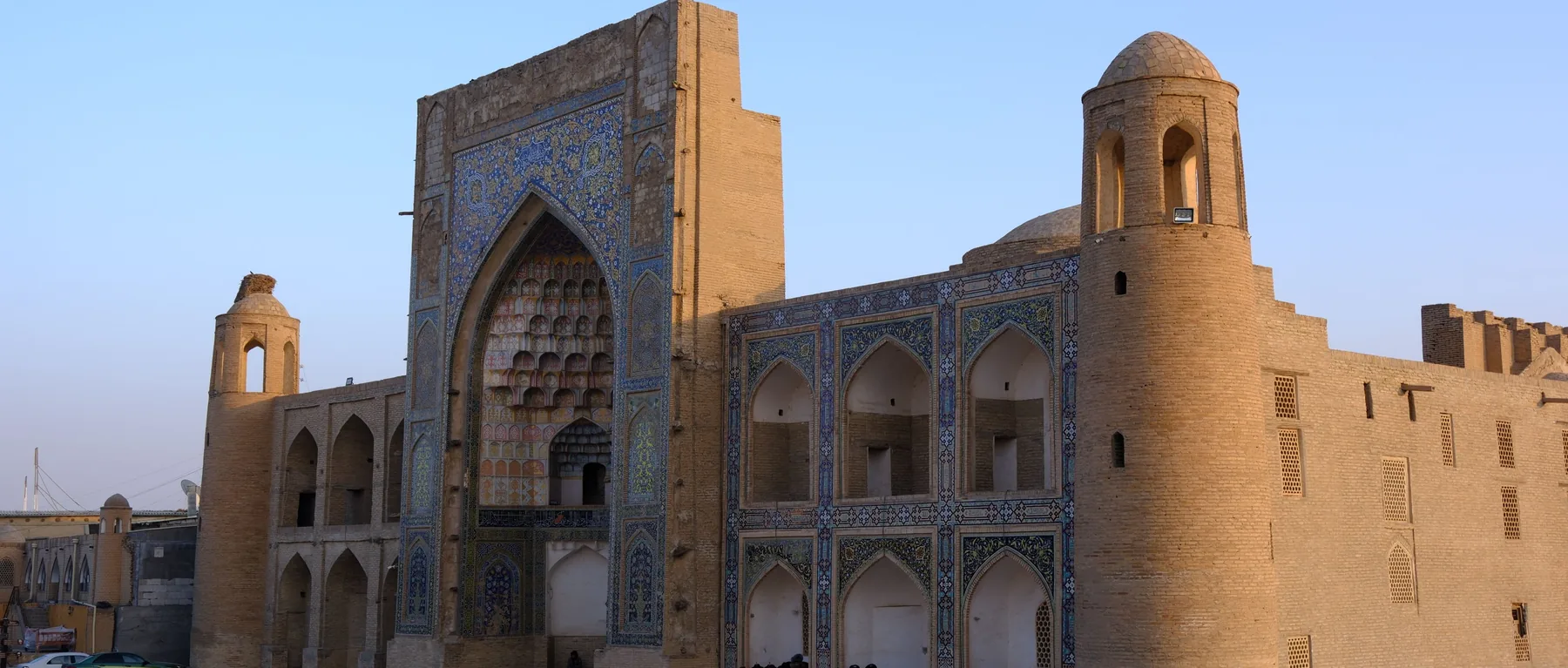
Across the square, Miri Arab Madrasa is a functioning religious school. Its paired blue domes and tiled portal make a strong counterpart to the mosque. Enjoy the facade from the public side without assuming classrooms or the full courtyard are tourist spaces.
Keep your plan flexible around local instructions. The minaret’s presence does not mean it can be climbed, and a tour description saying “visit” may mean an exterior explanation. Check exactly which interiors a ticket or guided option covers before paying.
Continue to the jewellers’ dome
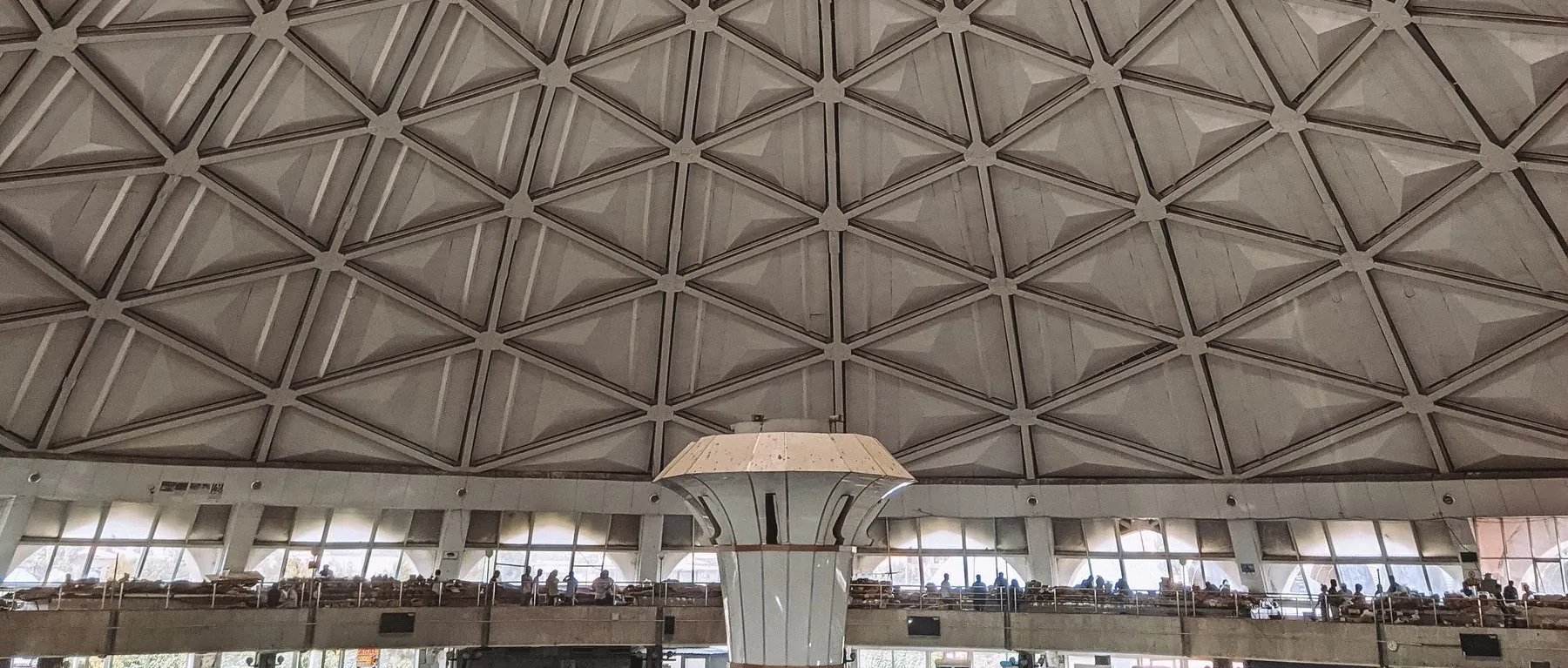
For a manageable extension, walk towards Toqi Zargaron and the facing Ulugbek and Abdulaziz Khan madrasahs. This keeps the outing within one old-town cluster. Look at the dome’s covered junction before browsing, and ask sellers about materials and production if you are considering a purchase.
For lunch, make a deliberate return towards Old Bukhara near Lyabi-Hauz for Uzbek dishes in a courtyard setting. The restaurant is not in Poi Kalyan Square: save the route and allow a separate walk. Ask what samsa or dumplings are available and clarify ingredients if you have dietary needs.
Choose the weather and pack for standing still
In summer, an early or later outing leaves fewer exposed hours in the square. Carry drinking water, sunscreen and a sun hat; modest lightweight layers are useful for both sun and mosque visits. In winter, bring a warm coat because looking closely at decoration involves standing still.
Closed walking shoes and a compact bag suit the paving and entrances. Check current access before travelling, and keep one optional interior rather than stacking the Ark museum onto an already tiring afternoon. Return to your accommodation or a meal break when the heat or cold starts to dominate the visit.
Check before you go
Opening arrangements and visitor rules can change. Check the official information before your trip.