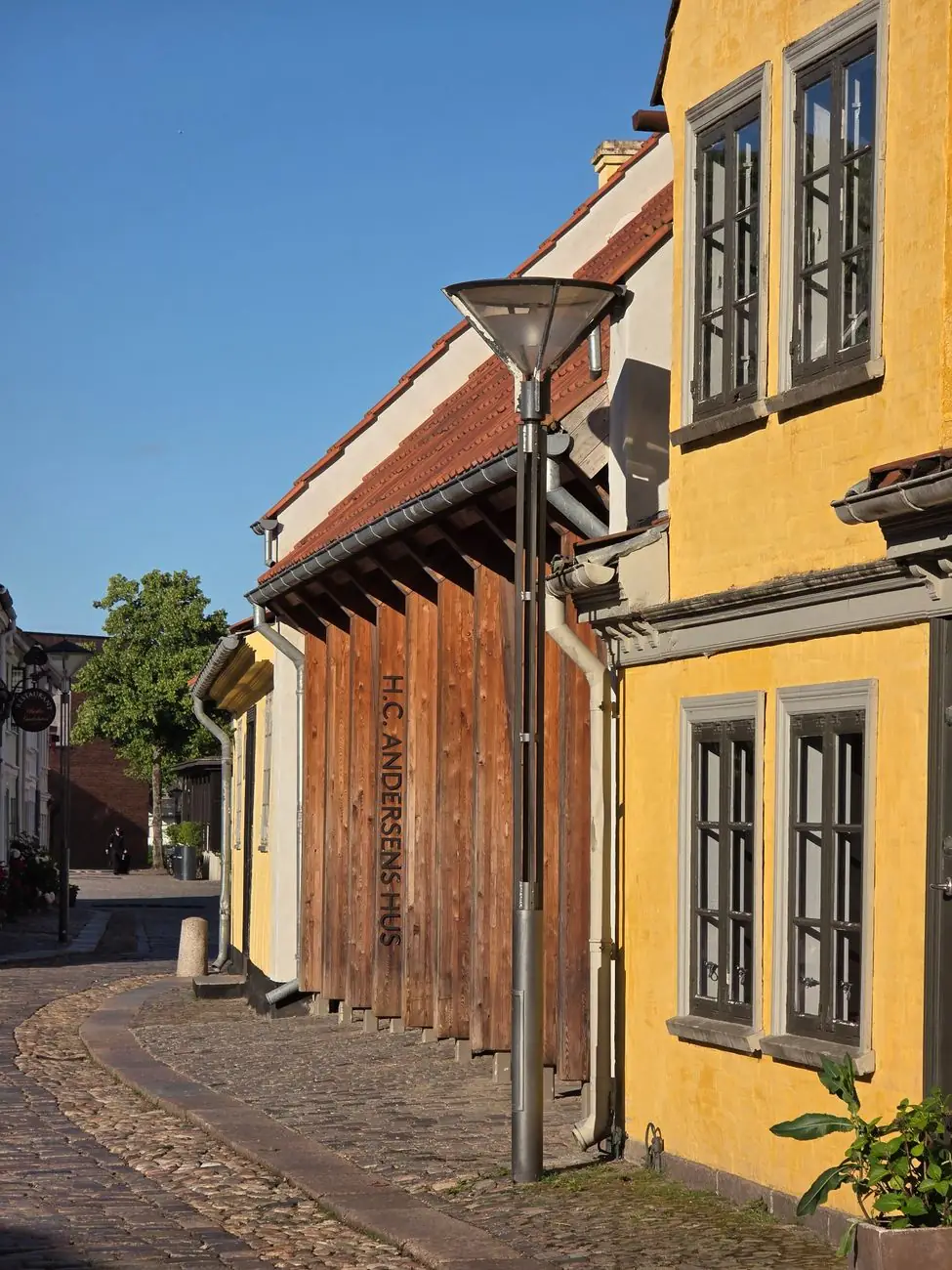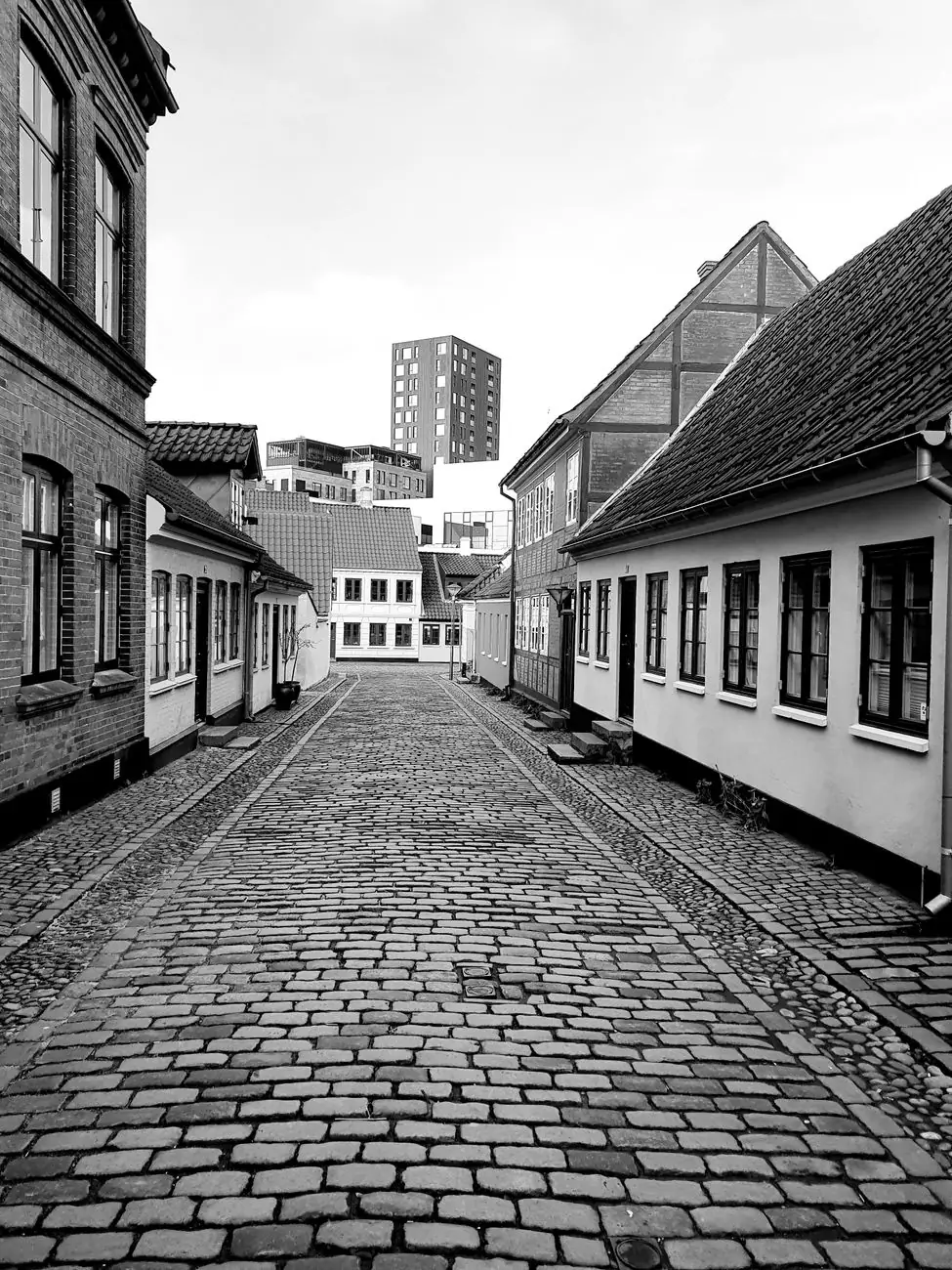
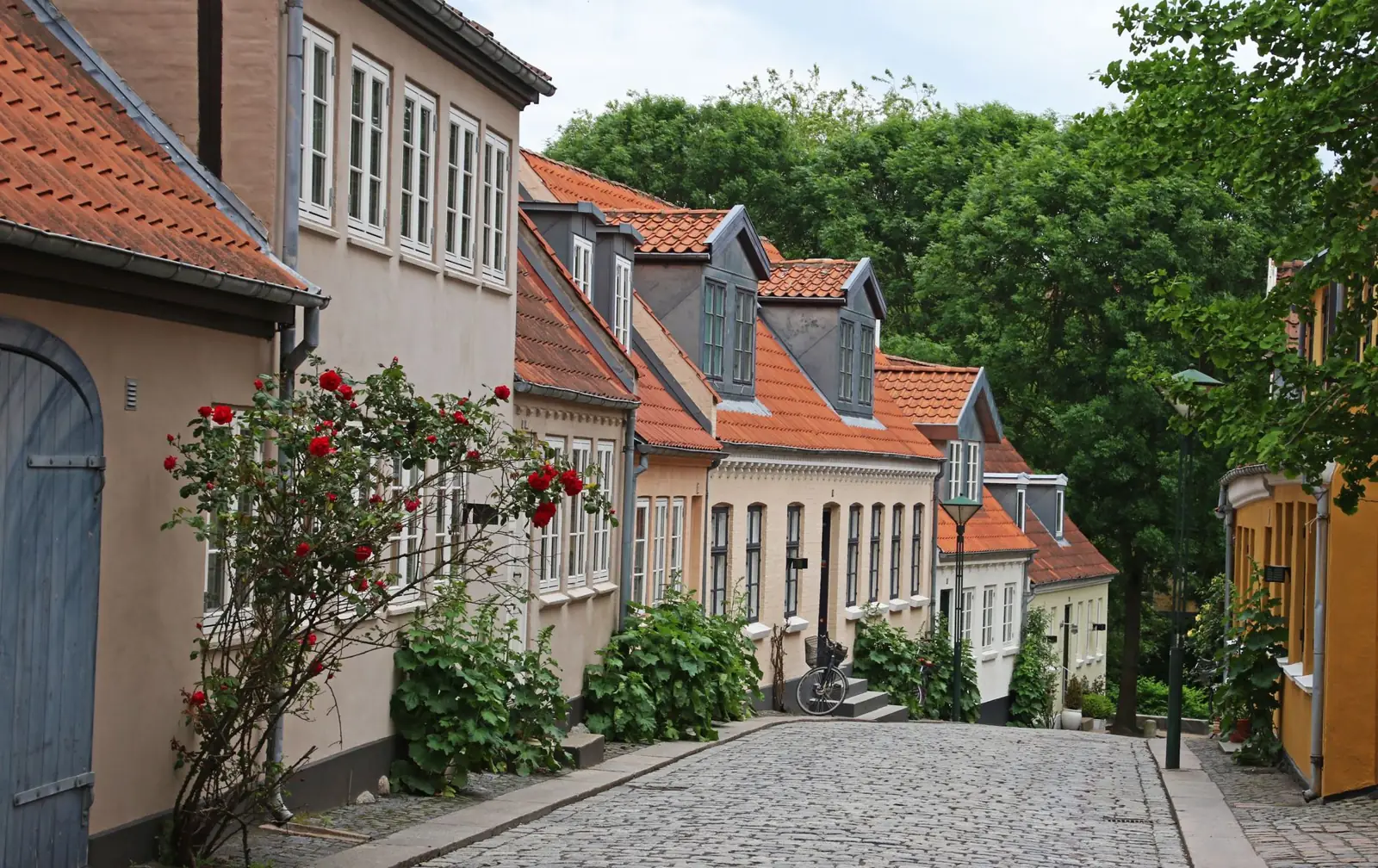

Houses along a cobbled lane in Odense’s historic centre
Denmark · Destination guide
Odense, Denmark
Best seasonJun–Sep
CurrencyDanish krone (DKK)
Plug typesC, E, F, K · 230 VCheck adapter →
Time zoneEurope/Copenhagen (UTC+2)
Emergency number112
Destination guide

A first look at Odense

Use the Andersen museum for one main reservation, then give art or railway history its own second day. River paths and a named food stop provide useful pauses between interiors.

Explore our Odense guides

Weather guide

Weather in Odense

Cool winters and changeable, generally mild summers call for layers. Harbour wind can make a pause feel colder, and rain remains possible throughout the year. Monthly values are calculated from NASA POWER MERRA-2 gridded daily data for 1991–2020 at the city coordinates. They represent a regional model cell, not a city weather station. Street shade, coastal exposure, elevation and urban warmth can differ. Climate averages do not predict an individual trip.

10–14°C

Changeable mild days with cooler mornings and evenings.

October · representative month, not a forecast
Evenings
6–10°C
Rain
Frequent rain and showers
Daylight
Daylight changes through the season; leave time for the outdoor route.
See weather details →

What this means for packing

Pack for cool damp days, with grippy shoes and a hood that works in wind. In Odense, plan the outfit around the Andersen Quarter and leave a weather alternative for Munkemose river paths.

Choosing a season

The best-season badge suggests months for general sightseeing, using the typical daytime temperatures and rainfall in our monthly guides. Beach holidays, festivals, winter sports and northern lights trips may suit different dates.

Climate methodology

Clothing planning bands use the calculated mean daily maximum (12.16°C) and minimum (8.17°C), rounded then expanded by 2°C each way. These are outfit prompts, not forecast limits or confidence intervals. Monthly values are calculated from NASA POWER MERRA-2 gridded daily data for 1991–2020 at the city coordinates. They represent a regional model cell, not a city weather station. Street shade, coastal exposure, elevation and urban warmth can differ. Climate averages do not predict an individual trip. Mean monthly precipitation is 68.35 mm, with 14.5 model days of at least 1 mm; precipitation includes water-equivalent snowfall. Complete daily records were checked before averaging all thirty years.

Reviewed 2026-10-09

NASA POWER MERRA-2 daily gridded data, averaged 1991–2020 · NASA POWER: daily data methodology · Odense official visitor information · Odense local transport · Danish electricity and socket information

About the climate in Odense

Cool winters and changeable, generally mild summers call for layers. Harbour wind can make a pause feel colder, and rain remains possible throughout the year. Monthly values are calculated from NASA POWER MERRA-2 gridded daily data for 1991–2020 at the city coordinates. They represent a regional model cell, not a city weather station. Street shade, coastal exposure, elevation and urban warmth can differ. Climate averages do not predict an individual trip.

Packing guide

What to wear in Odense in February.

An example packing list for Odense in February

Use this as a starting point and choose what suits your plans. Packtricia tailors your list and quantities to your trip length, weather and preferences.

Clothing

  • Underwear
  • Bras (if worn)
  • Socks
  • Sleepwear
  • Thermal base-layer top
  • Long-sleeved tops
  • Trousers
  • Warm sweater or fleece
  • Warm insulated coat
  • Water-resistant walking boots with grip
  • Warm hat
  • Scarf
  • Gloves

Toiletries

  • Toothbrush
  • Toothpaste
  • Shampoo
  • Conditioner
  • Body wash or soap
  • Deodorant
  • Skincare products
  • Sunscreen
  • Hairbrush or comb
  • Shaving supplies (if used)
  • Menstrual products (if needed)
  • Contact lens solution (if used)

Essentials

  • Passport or accepted travel ID
  • Travel tickets and booking confirmations
  • Wallet and payment cards
  • Phone
  • Charging cable and charger
  • Travel adapter (if needed)
  • Medication (if needed)
  • Glasses or contact lenses (if used)
  • Refillable water bottle
  • Day bag
  • Backup cash
  • Power bank
  • Water-resistant pouch for phone and documents
Monthly weather and packing notes

Keep gloves and a warm outer layer for slow outdoor stops; allow an indoor break between exposed walks. In Odense, plan the outfit around the Andersen Quarter and leave a weather alternative for Munkemose river paths.

Daytime
1–5°C
Evenings
-2–2°C
Rain
Frequent rain and showers
Daylight
Short winter days: put the river or hill walk near midday.
Packing style
Insulating layers and grippy footwear

Clothing planning bands use the calculated mean daily maximum (2.96°C) and minimum (-0.45°C), rounded then expanded by 2°C each way. These are outfit prompts, not forecast limits or confidence intervals. Monthly values are calculated from NASA POWER MERRA-2 gridded daily data for 1991–2020 at the city coordinates. They represent a regional model cell, not a city weather station. Street shade, coastal exposure, elevation and urban warmth can differ. Climate averages do not predict an individual trip. Mean monthly precipitation is 47.42 mm, with 10.6 model days of at least 1 mm; precipitation includes water-equivalent snowfall. Complete daily records were checked before averaging all thirty years.

Outfit ideas for your outings

February around the Andersen Quarter

  • Thermal or warm long-sleeved top
  • Warm wool sweater or fleece
  • Comfortable long trousers
  • Water-resistant boots with grip for frost and slush
  • Warm weather-resistant coat with a hood

An exposed outing around Munkemose river paths

  • Thermal or warm long-sleeved top
  • Warm wool sweater or fleece
  • Water-resistant boots with grip for frost and slush
  • Warm weather-resistant coat with a hood
  • Carry water and allow room to store a removed layer

A slower stop at Brandts and Storms Pakhus

  • Thermal or warm long-sleeved top
  • Removable knit
  • Comfortable trousers or skirt
  • Closed walking shoes
  • Small bag for the outer jacket

What to leave behind

  • Stiff unworn shoes: test them before a day on old paving, riverside paths or hill steps.
  • Summer-only outfits: an insulated outer layer is useful for slow outdoor sightseeing.
  • A plan with every hour outdoors: short daylight, wind and a slow museum queue make warm layers and an indoor pause useful.

Reviewed 2026-10-09

NASA POWER MERRA-2 daily gridded data, averaged 1991–2020 · NASA POWER: daily data methodology · Odense official visitor information · Odense local transport · Danish electricity and socket information

Transport guide

Getting around Odense

Use Rejseplanen for Odense bus, light-rail and train connections. Enter the actual stop for your destination and check the fare area for the journey you choose.

Check the operator’s current service notices and ticket instructions before travelling.

Practical essentials

Language and calling code

Language
Danish
Calling code
+45
Useful essentials for Odense
  • Broken-in walking shoes with seasonal grip
  • Removable mid-layer
  • Hooded rain shell or weather-resistant winter coat
  • Small zipped day bag
  • Travel adapter matched to your accommodation’s sockets
  • Saved attraction bookings and local transport details

Do you need a visa?

Check travel-document and visa requirements for your passport, destination and transit stops.

Check your requirements on TravelDoc

Use the checker as a starting point, then confirm requirements with the relevant government or embassy before travelling.

Things to do in Odense

Find a guided walk or an attraction visit to fit around your plans in Odense.

Stay connected

Mobile data for your trip. Check what your current plan includes for roaming. If you need another option for maps, messages and booking details, compare NXTL eSIM coverage and rates. Check that your phone supports eSIM and is unlocked, and check coverage for every stop. Download important maps and confirmations for offline use too.