Start with the harbour’s working setting
Begin around Reykjavík Old Harbour and look at the relationship between quays, former working buildings and current visitor businesses. This remains a place where boats and people have practical jobs to do. Keep to public areas and let mooring lines, loading spaces and private vessels remain working space.
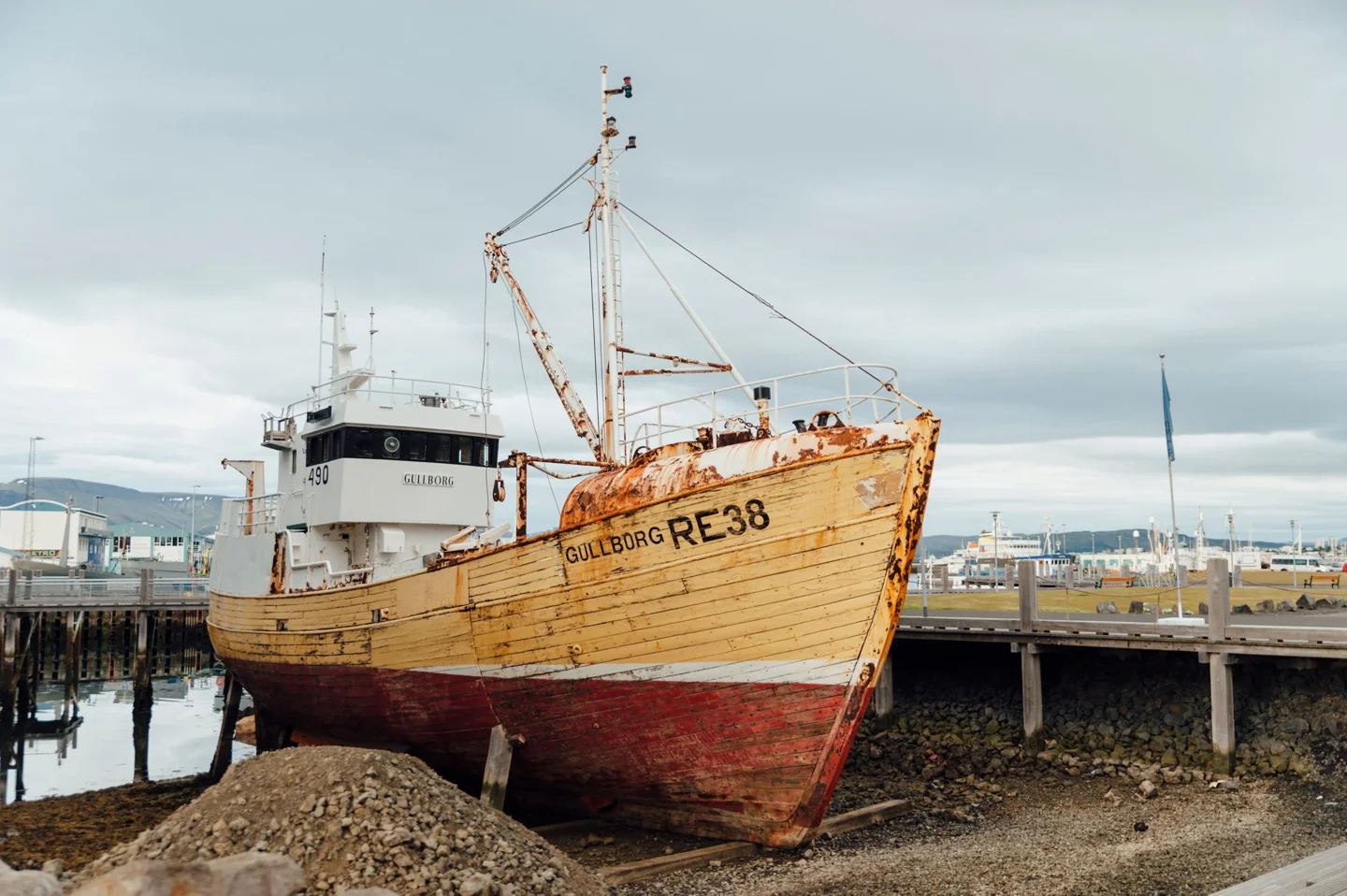
The wooden fishing boat in this guide’s photograph is Gullborg RE38, not the Coast Guard vessel Óðinn. It illustrates the harbour’s fishing setting; the image does not establish that this boat is open for visits. Choose an actual advertised museum or sailing if you want to go aboard something.
Mobile data for your trip. Check what your current plan includes for roaming. If you need another option for maps, messages and booking details, compare NXTL eSIM coverage and rates. Check that your phone supports eSIM and is unlocked, and check coverage for every stop. Download important maps and confirmations for offline use too.
Make a seafood meal part of the route
Sægreifinn – Sea Baron at Geirsgata 8 is a specific harbour meal option. The Icelandic tourism directory identifies the green former fisherman’s hut and describes lobster soup and grilled seafood skewers. Those are useful dishes to ask about, rather than an instruction simply to find a restaurant after the walk.
Older local Reykjavík Grapevine food writing explains the venue’s place in the harbour’s food scene. That history does not prove today’s exact soup recipe, catch or prices. Confirm the current menu, dietary needs and table before making the meal essential, and avoid treating a busy working day as a staged tasting event.
Continue towards maritime interpretation in Grandi
Follow the permitted street route towards Reykjavík Maritime Museum. Its current permanent exhibition, Fish & folk – 150 years of fisheries, gives the outing a clear indoor purpose: look at changes in fishing and processing rather than only photographing boats outside.
The museum also has temporary exhibition rooms and floating exhibits. Use the current programme to choose what interests you; an exhibition archive from years ago is not a promise that the same display is still installed. A museum visit can be the main Grandi stop without adding every nearby commercial attraction.
Separate the indoor museum from Óðinn
The museum’s visitor information checked on 16 October 2026 offers regular guided tours aboard Óðinn from March through October. The vessel’s Cod Wars and rescue history is a different experience from the indoor displays. Confirm the selected date, access and ticket rather than assuming that buying one admission opens every vessel.
Outside the published regular season, keep the indoor museum as the proposed visit and ask about any specific alternative arrangement. Packtricia will recheck seasonal operation, but readers should check the museum before travelling. The existence of a moored ship is not evidence of an open visitor gangway.
A pass may suit a broader museum day
The City Card’s official inclusion list names the Maritime Museum. Compare it with the actual admissions and city-bus journeys you intend to use, and check how to collect the physical card. Do not assume the museum inclusion also covers a separate Óðinn guided tour.
Compare the Reykjavík City Card if its included museums, city buses and pools match your actual plans. Check the duration, current inclusions and voucher exchange; airport transfers, tower entry, concerts and separately operated vessel tours are not automatically covered.
Keep optional sailings and the return independent
Whale-watching boats leave from the harbour, but a land-based history walk does not require a sailing. If you choose one separately, confirm its actual departure, equipment guidance and weather conditions; no wildlife sighting or calm crossing is guaranteed by this guide.
For a shorter day, finish after the seafood stop or museum and return towards the centre. A warm removable layer and waterproof shell are useful when you stop moving by the water, even after a comfortable indoor visit. Leave room for that pause instead of turning the harbour into a checklist of vessel names and unrelated excursions.
Check before you go
Opening arrangements and visitor rules can change. Check the official information before your trip.
- Reykjavík City Museum: Maritime Museum and seasonal vessel tours
- Reykjavík City Museum: current opening information
- Reykjavík City Museum: site-specific access
- Icelandic tourism directory: Sea Baron, address and seafood specialities
- The Reykjavík Grapevine: Sea Baron food recommendations, older local context
- Visit Reykjavík: City Card inclusions, collection and exclusions
- Icelandic Met Office: actual weather and warnings