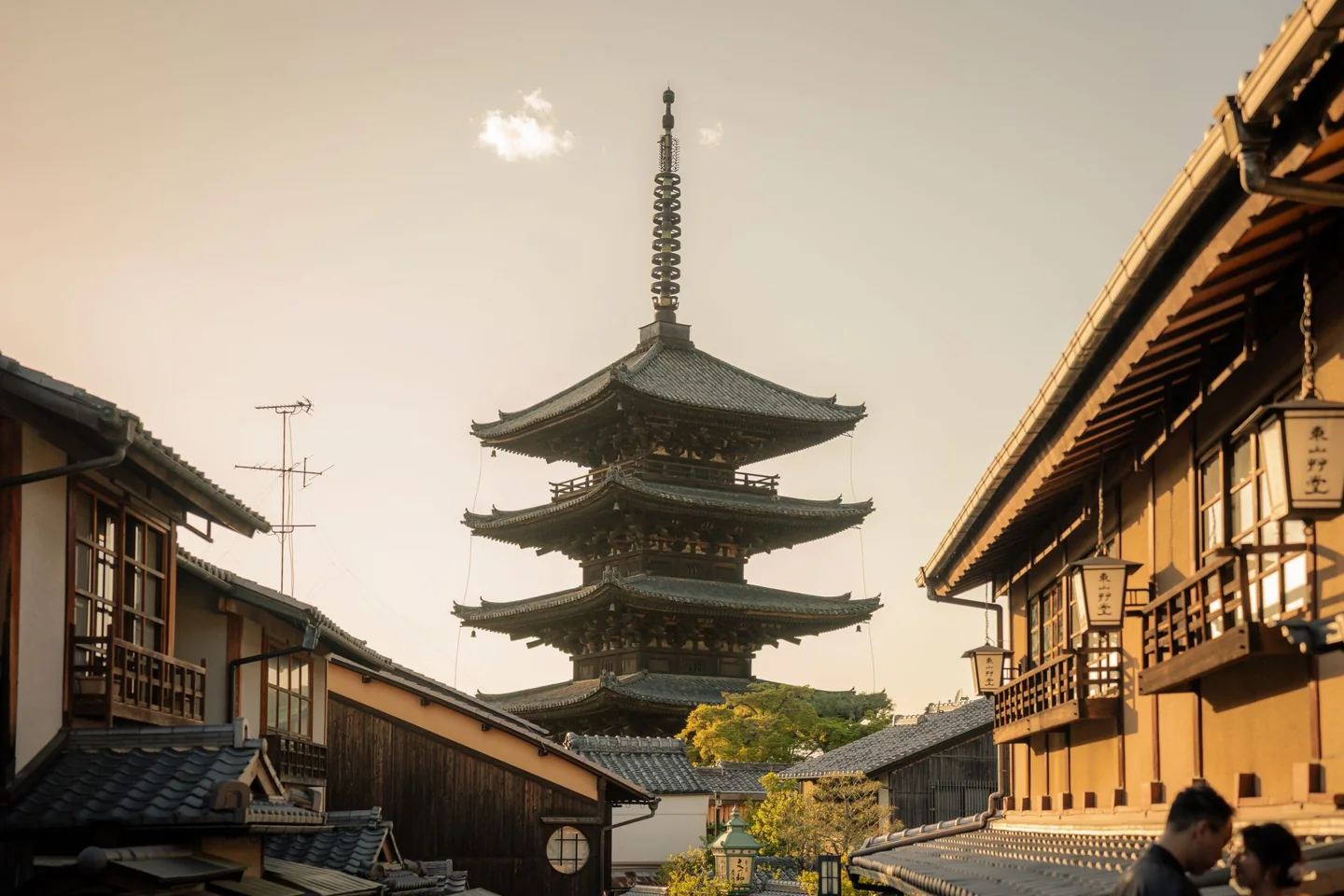
Yasaka Pagoda above traditional wooden buildings in Kyoto’s Higashiyama district
Japan · Destination guide
Kyoto, Japan
CurrencyJapanese yen (JPY)
Plug typesA, B · 100 VCheck adapter →
Time zoneAsia/Tokyo (UTC+9)
Emergency number110 (police); 119 (fire / ambulance)
Destination guide

A first look at Kyoto

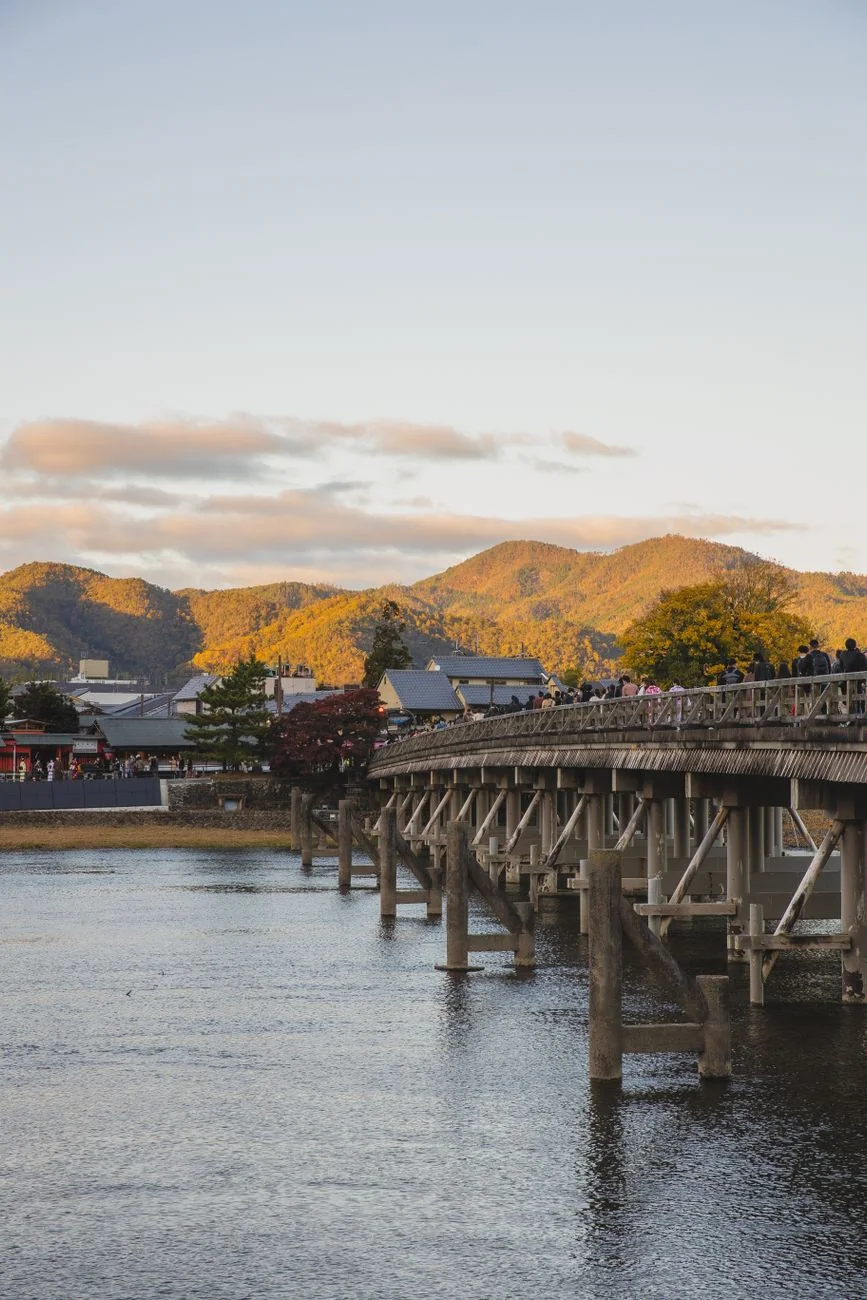
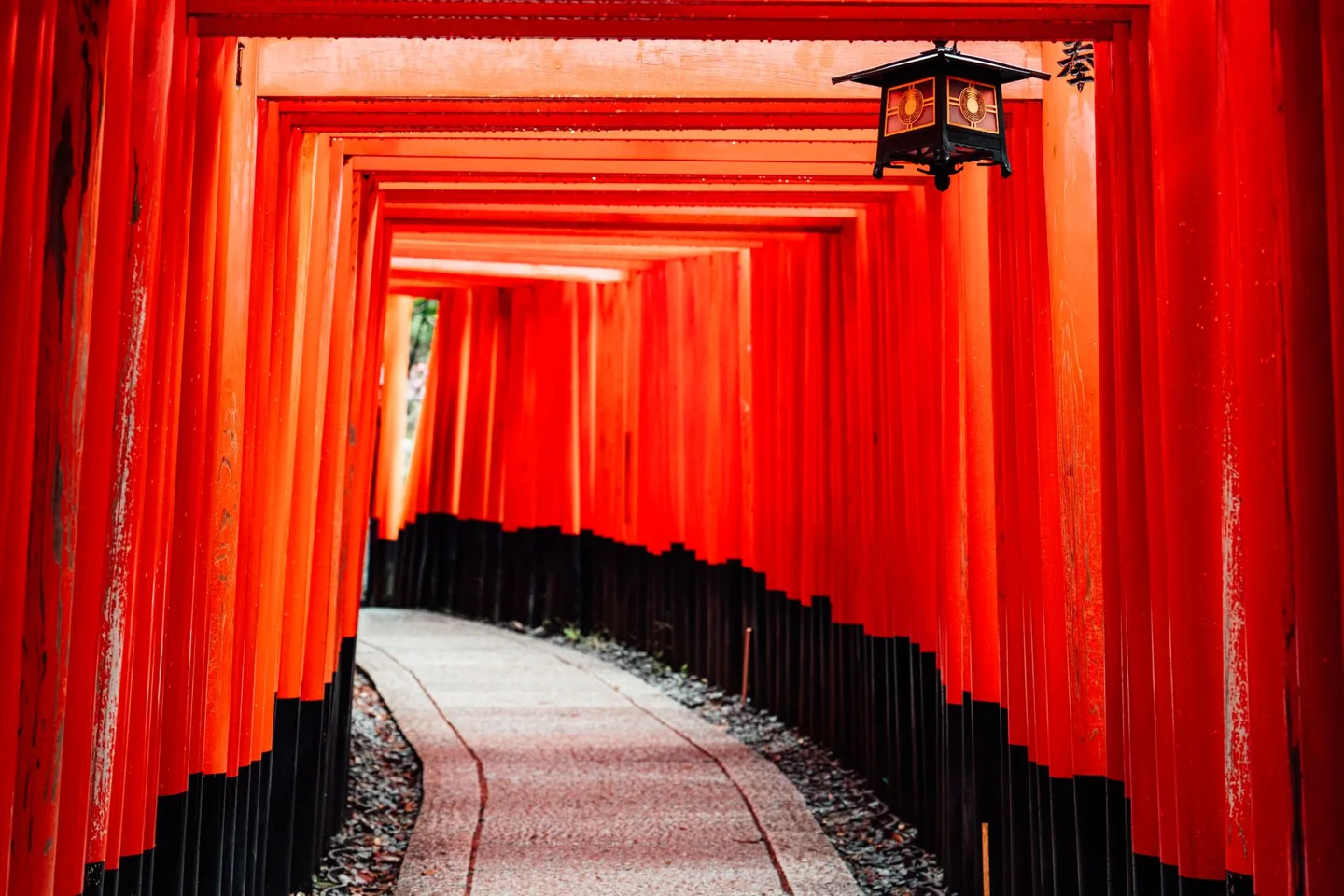
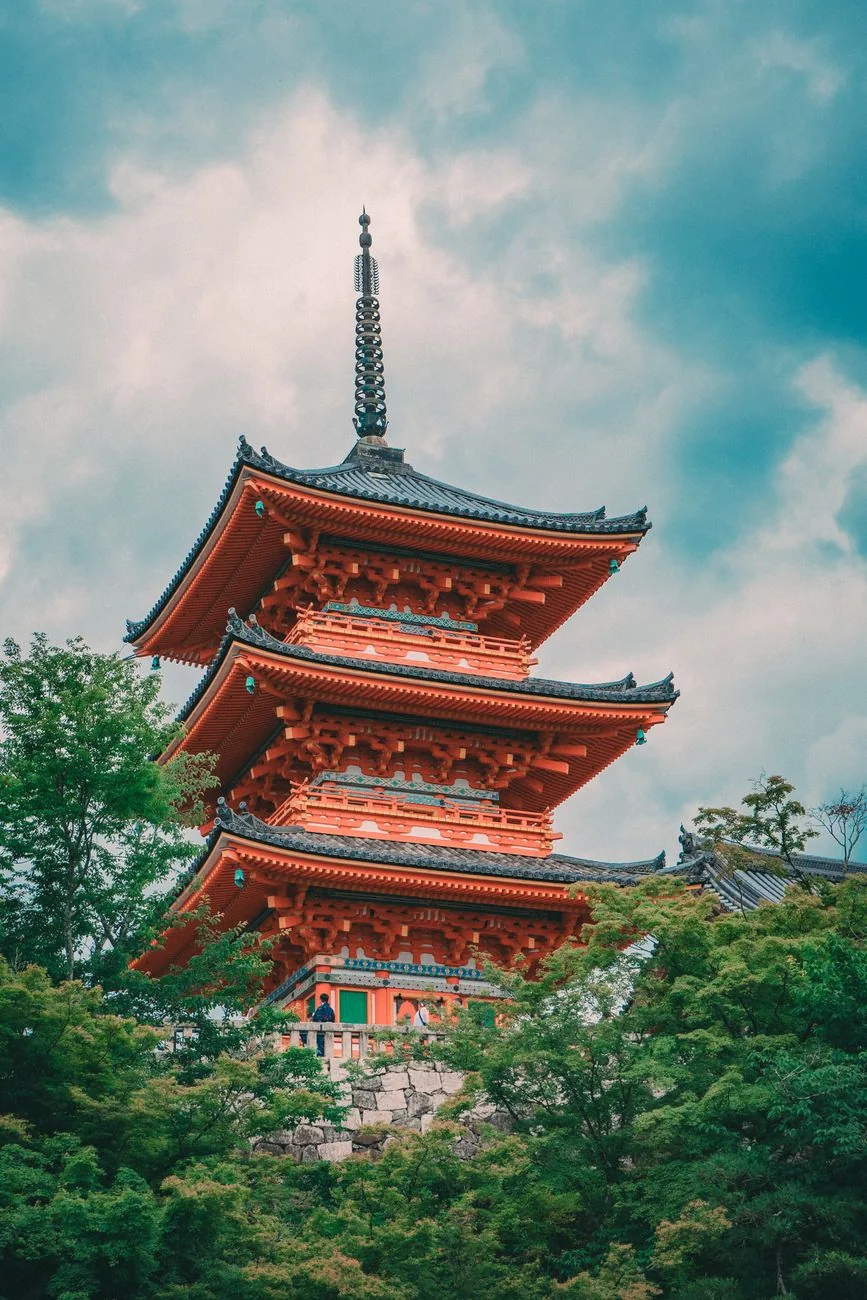
Start with Kiyomizu-dera and Higashiyama’s stepped lanes, then explore Gion’s public streets. Keep Arashiyama’s river and temple garden or Fushimi Inari’s torii paths for a separate outing, with time for a seated meal between walks.

Explore our Kyoto guides

Weather guide

Weather in Kyoto

Kyoto has cold winter mornings, mild spring and autumn days, and hot, humid summers. June and July are especially wet in the long-term record; rain protection is useful throughout the year.

21–25°C

Mild to warm days, cooler evenings

October · representative month, not a forecast
Evenings
12–16°C
Rain
Showers possible
Daylight
Daylight changes through the month
See weather details →

What this means for packing

Milder days suit temple grounds and riverside walks, with a light layer for evenings. Rain remains possible; autumn colours are not guaranteed for a particular week.

Choosing a season

The best-season badge suggests months for general sightseeing, using the typical daytime temperatures and rainfall in our monthly guides. Beach holidays, festivals, winter sports and northern lights trips may suit different dates.

Climate methodology

Broad planning ranges rounded to roughly 2°C either side of Kyoto’s 1991–2020 mean daily maximum (23.4°C) and minimum (14.4°C) for October. JMA records mean monthly precipitation of 143.2 mm; a monthly total does not predict rainy days or your travel dates. These are city-station normals, not forecast limits or mountain conditions. Check the forecast before travelling.

Reviewed 2026-10-20

Japan Meteorological Agency — Kyoto 1991–2020 monthly normals · Kyoto City — weather and clothing

About the climate in Kyoto

Kyoto has cold winter mornings, mild spring and autumn days, and hot, humid summers. June and July are especially wet in the long-term record; rain protection is useful throughout the year.

Packing guide

What to wear in Kyoto in September.

An example packing list for Kyoto in September

Use this as a starting point and choose what suits your plans. Packtricia tailors your list and quantities to your trip length, weather and preferences.

Clothing

  • Underwear
  • Bras (if worn)
  • Socks
  • Sleepwear
  • Breathable tops
  • Lightweight trousers or longer skirt
  • Quick-drying layers
  • Sun hat
  • Comfortable walking shoes
  • Clean socks
  • Light indoor layer
  • Rain jacket
  • Grippy walking shoes (for hillside outings)

Toiletries

  • Toothbrush
  • Toothpaste
  • Shampoo
  • Conditioner
  • Body wash or soap
  • Deodorant
  • Skincare products
  • Sunscreen
  • Hairbrush or comb
  • Shaving supplies (if used)
  • Menstrual products (if needed)
  • Contact lens solution (if used)

Essentials

  • Passport or accepted travel ID
  • Travel tickets and booking confirmations
  • Wallet and payment cards
  • Phone
  • Charging cable and charger
  • Travel adapter (if needed)
  • Medication (if needed)
  • Glasses or contact lenses (if used)
  • Refillable water bottle
  • Day bag
  • Sunglasses
  • Compact umbrella
  • Water-resistant pouch for phone and documents
  • Reusable shopping bag
  • Small hand towel
  • Portable fan (if useful for heat)
  • Sun protection
Monthly weather and packing notes

Warm, humid conditions can continue into September. Keep rain protection ready and check official weather and transport alerts before riverside or hill outings.

Daytime
27–31°C
Evenings
19–23°C
Rain
Showers possible
Daylight
Longer days; make room for heat breaks
Packing style
Breathable clothes and rain protection

Broad planning ranges rounded to roughly 2°C either side of Kyoto’s 1991–2020 mean daily maximum (29.2°C) and minimum (20.7°C) for September. JMA records mean monthly precipitation of 178.5 mm; a monthly total does not predict rainy days or your travel dates. These are city-station normals, not forecast limits or mountain conditions. Check the forecast before travelling.

Outfit ideas for your outings

A September Higashiyama walk

  • Breathable tops
  • Lightweight trousers or longer skirt
  • Quick-drying layers
  • Sun hat and breathable layers

Arashiyama’s river and garden

  • Loose quick-drying clothes
  • Walking shoes with grip
  • Compact umbrella or rain jacket

Temple interiors and transport

  • Clean socks
  • Easy-to-remove footwear
  • Comfortable trousers or longer skirt
  • A small bag for your outer layer

What to leave behind

  • A heavy everyday coat: choose light layers for the heat and indoor cooling.
  • Unworn slippery shoes: Kyoto outings often include steps and wet stone paths.

Reviewed 2026-10-20

Japan Meteorological Agency — Kyoto 1991–2020 monthly normals · Kyoto City — weather and clothing

Transport guide

Getting around Kyoto

Start with Kyoto Transit Planner for bus and train routes, then check the operator and ticket coverage for each leg. Combine rail with short walks or bus links; a city subway and bus pass does not cover every railway serving Kyoto.

Check the operator’s current service notices and ticket instructions before travelling.

Practical essentials

Language and calling code

Language
Japanese
Calling code
+81
Useful essentials for Kyoto
  • Comfortable walking shoes that are easy to remove
  • Clean socks for temple interiors
  • Compact umbrella
  • Seasonal layers
  • Small day bag
  • Phone charger and power bank
  • Type A / B adapter if your plugs differ

Do you need a visa?

Check travel-document and visa requirements for your passport, destination and transit stops.

Check your requirements on TravelDoc

Use the checker as a starting point, then confirm requirements with the relevant government or embassy before travelling.

Things to do in Kyoto

Find a guided walk or an attraction visit to fit around your plans in Kyoto.

Stay connected

Mobile data for your trip. Check what your current plan includes for roaming. If you need another option for maps, messages and booking details, compare NXTL eSIM coverage and rates. Check that your phone supports eSIM and is unlocked, and check coverage for every stop. Download important maps and confirmations for offline use too.