Go for the meeting of the rivers
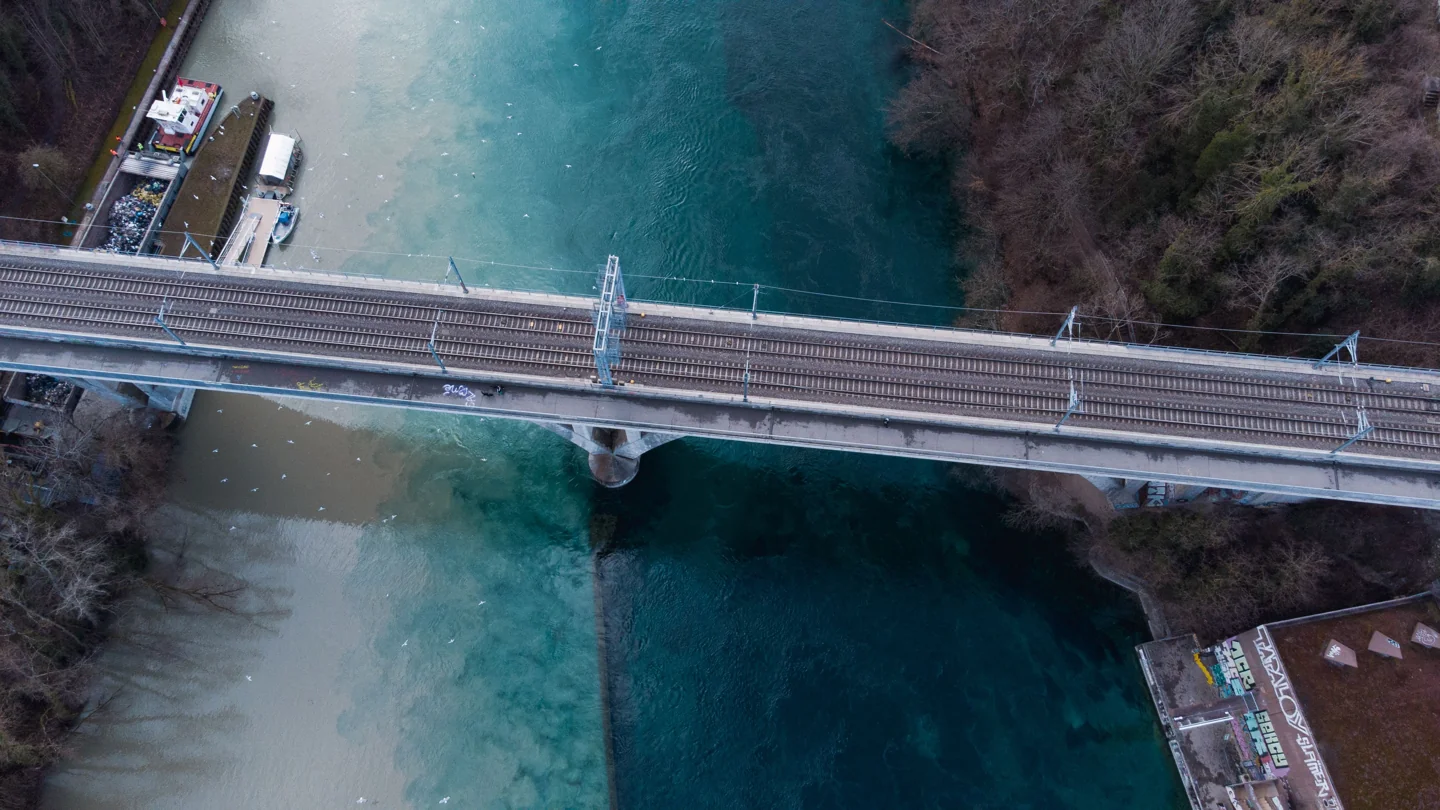
Pointe de la Jonction is where the Rhône and Arve meet. Looking at the different water colours gives this outing a clear subject beyond simply walking beside a river. The contrast changes with conditions, so treat it as something to observe rather than a guaranteed photograph with one precise colour boundary.
Geneva-raised local writer András Barta recommends the point and the higher railway-bridge perspective. Geneva Tourism independently identifies the Jonction bridge viewpoint. That combination supports a worthwhile smaller discovery, without calling a well-known local meeting place an undiscovered secret or repeating the writer’s speculative explanation of the water.
Mobile data for your trip. Check what your current plan includes for roaming. If you need another option for maps, messages and booking details, compare NXTL eSIM coverage and rates. Check that your phone supports eSIM and is unlocked, and check coverage for every stop. Download important maps and confirmations for offline use too.
Use the Rhône to orient the approach
For an approach from central Geneva, use the Bâtiment des Forces Motrices as an identifiable river-side landmark, then follow public routes towards the Jonction district. The shift from central streets to water and trees is part of the appeal; allow time for stops rather than using a guessed walking duration as a target.
Keep the route on signed public paths and check current access where work or weather affects the riverbank. You can turn back before the point and still enjoy a shorter outing. This is especially useful after an indoor morning, when a little open space may be more welcome than another long sightseeing circuit.
Distinguish the point from the viaduct viewpoint
The low point and Viaduc de la Jonction offer different perspectives. The viaduct carries railway tracks alongside a pedestrian route; use the pedestrian side and actual public approach. A top-down aerial photograph such as this guide’s shows the bridge and waters, not the exact view a person gets from the walkway.
For the higher approach, check the route towards the Bois de la Bâtie side and whether gradients suit your group. If it feels unsuitable, keep the lower river outing instead of forcing a viewpoint climb. Stay on the public route and respect barriers; neither a picture nor a map pin establishes permission to enter railway space.
Plan an inland meal rather than relying on a seasonal kiosk
Café du Grütli at Rue du Général-Dufour 16 is a concrete meal choice when returning towards the centre. Its operator lists changing lunch dishes and evening vegan, vegetarian and omnivore options. That makes it useful for a mixed group, with the actual menu and dietary details checked before choosing.
The café is an inland stop, not a restaurant at the confluence. Use TPG’s current planner if you would prefer transport back towards the central cultural quarter after the walk. A reservation and the actual service calendar matter more than assuming the river’s seasonal kiosks will be open on a cold or wet day.
Keep this an adaptable outdoor day
Wear shoes with grip and carry a removable layer and rain protection. Slower time looking at the water can feel cooler than walking between streets. Choose suitable daylight for an unfamiliar route and leave enough time for a return that feels comfortable for everyone.
The guide is a walking and viewpoint outing, not a recommendation to enter either river. If conditions make the banks unappealing, choose the shorter central river section or an open indoor visit instead. A smaller route that fits the day is more useful than treating every viewpoint as something you must reach.
Check before you go
Opening arrangements and visitor rules can change. Check the official information before your trip.
- András Barta, raised in Geneva: Pointe de la Jonction
- Geneva Tourism: actual Rhône/Arve confluence viewpoint
- Geneva Tourism discovery map: viaduct and route anchors
- Café du Grütli operator: seasonal menu and address
- Café du Grütli operator: contact and reservations
- TPG operator: visitor planning and zone 10