See the whole frontage before moving closer
Approach Teatro Degollado from Plaza de la Liberación. Stand back to take in the portico and triangular pediment together, then move closer for the carved figures above the columns. The change in viewpoint is the point of this stop: the theatre reads differently across the plaza and from the pavement below.
Keep entrances clear, especially if staff are preparing for an event. Photographs from public space do not require you to join an audience queue. The building is a working theatre, so a busy entrance may reflect rehearsals or an evening performance rather than unrestricted visiting.
Mobile data for your trip. Check what your current plan includes for roaming. If you need another option for maps, messages and booking details, compare NXTL eSIM coverage and rates. Check that your phone supports eSIM and is unlocked, and check coverage for every stop. Download important maps and confirmations for offline use too.
Look for the relief and the layers of construction
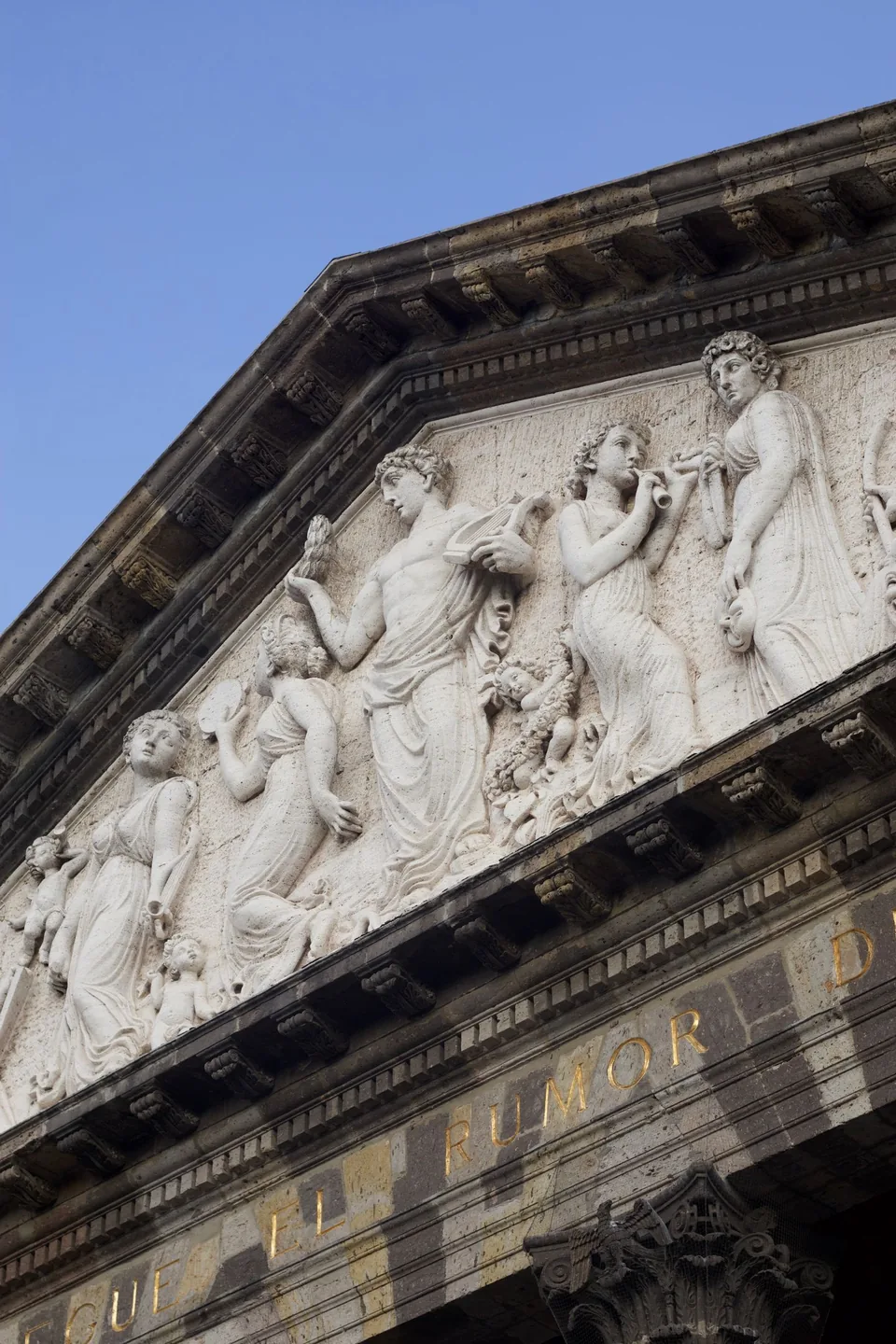
The classical figures in the pediment reward a closer look: notice instruments, drapery and how the relief fills the triangular space. Compare these details with the plainer repeated columns below. You need not identify every figure to see how the facade signals a place for the arts.
The theatre opened in 1866, while later work continued to shape the building. INAH’s architectural record documents twentieth-century completion work on the portico and relief. Avoid reading the entire frontage as a single untouched nineteenth-century surface.
Separate a visit from a show
For an interior visit, consult the current venue information and ask specifically about public access to the auditorium. Guided-visit announcements are tied to programmes and dates; an old summer offer is not a guarantee of a year-round tour. Exterior sightseeing is the dependable fallback if no interior visit is confirmed.
The auditorium has painted decoration inspired by the Divine Comedy. If access is available, look at how the ceiling painting fits the room instead of rushing straight back to the door. Follow staff directions about seating, photographs and areas being prepared for performers.
Choose a performance for its programme
The theatre hosts the Jalisco Philharmonic Orchestra as well as other music, dance and stage programmes. Choose an event you actually want to hear or see, then confirm the date, ticket terms and seating through the current organiser. Visiting the facade does not reserve a seat.
Allow enough time to arrive and find your entrance without combining the final minutes with a museum visit elsewhere. Check the event’s own late-entry policy. A quieter afternoon architecture stop and an evening show can work well as two separate visits.
Build a compact surrounding route
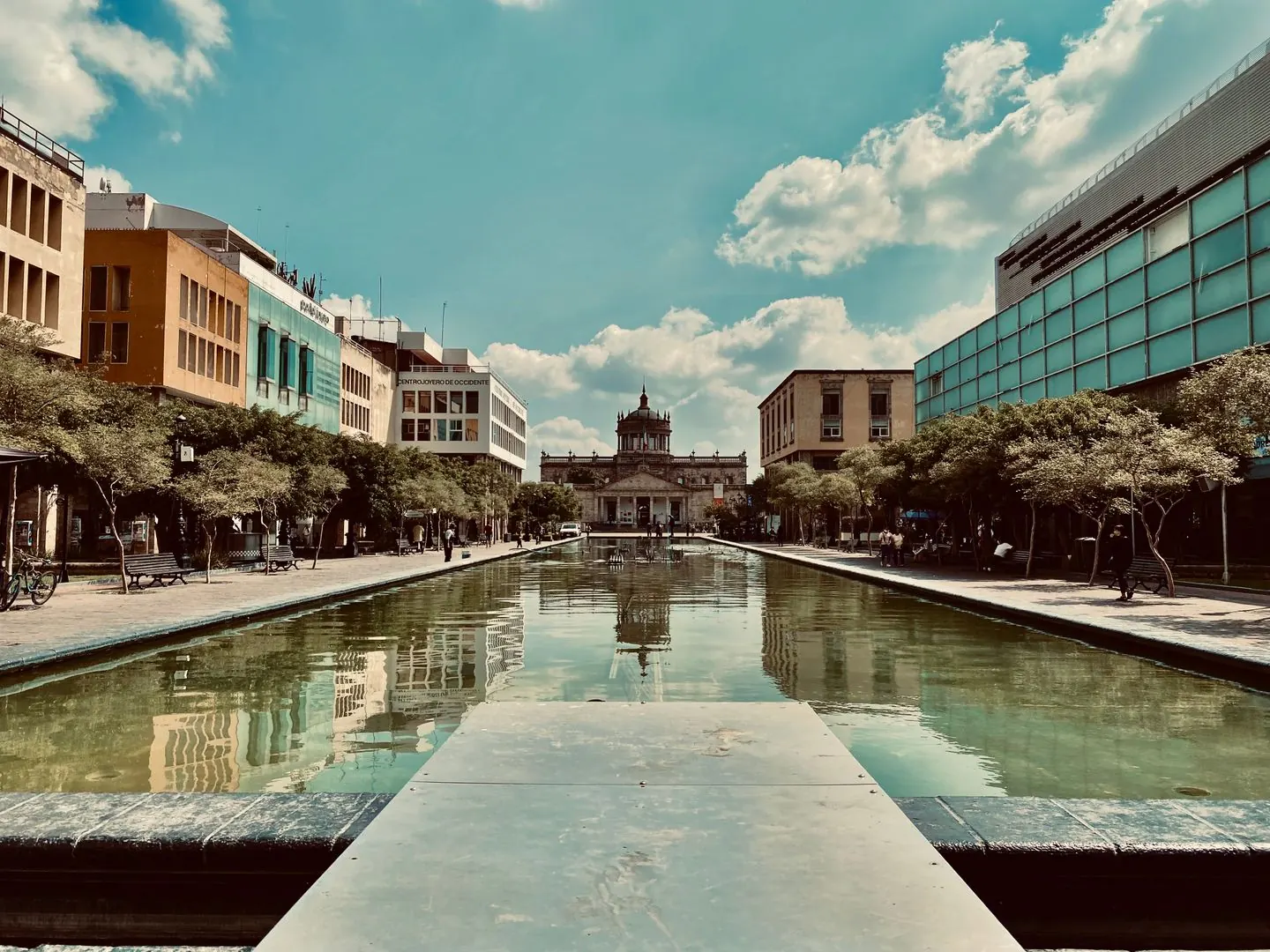
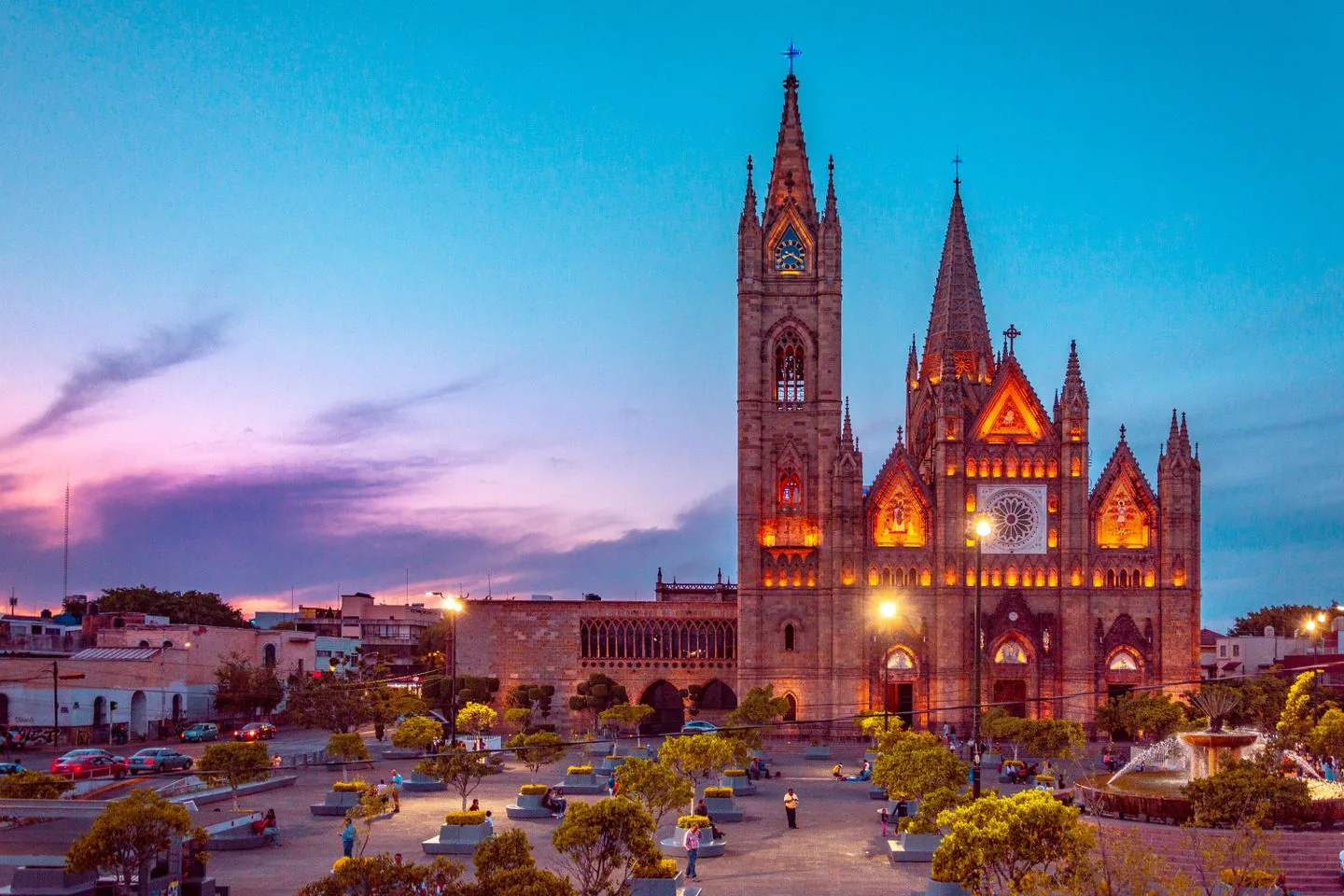
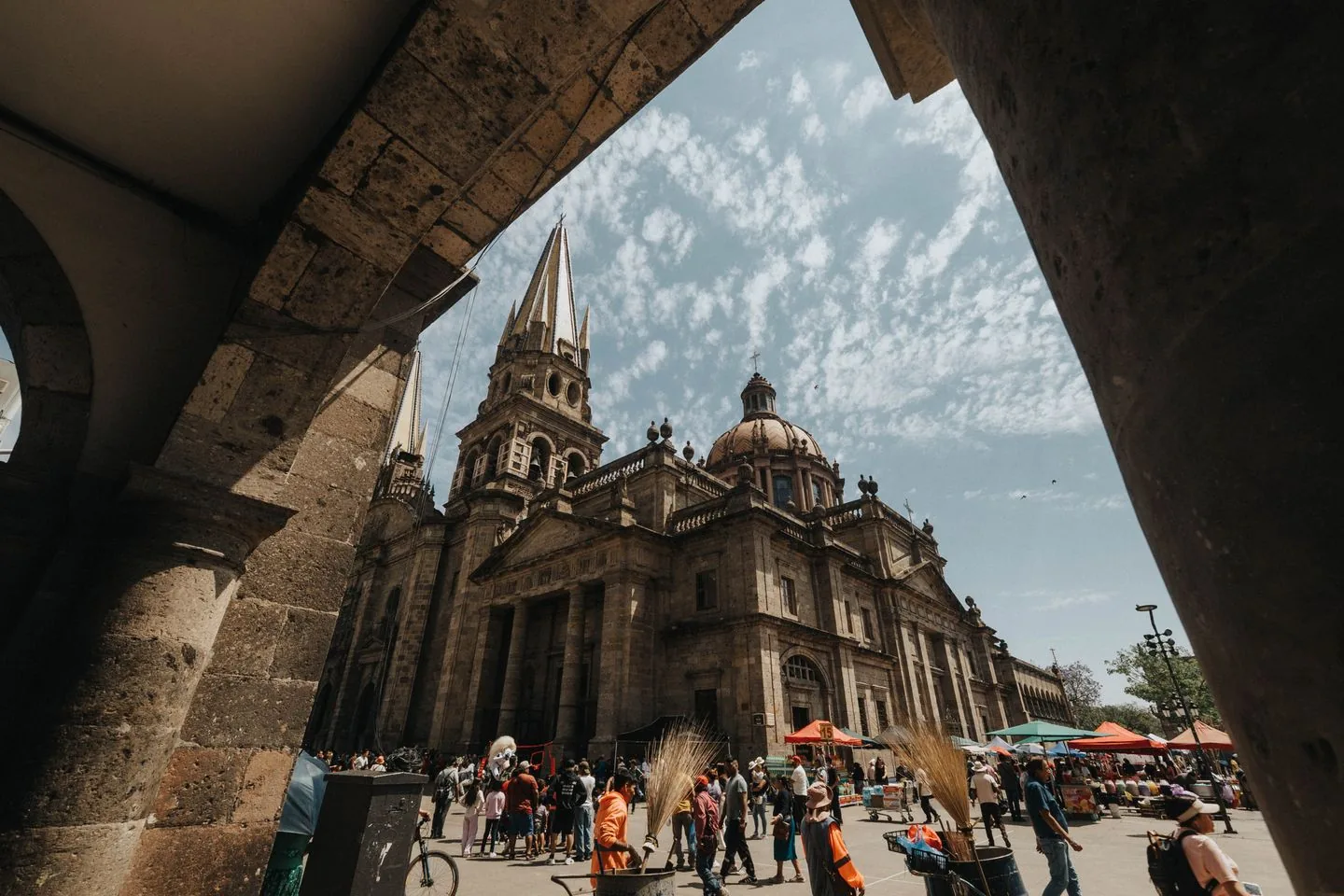
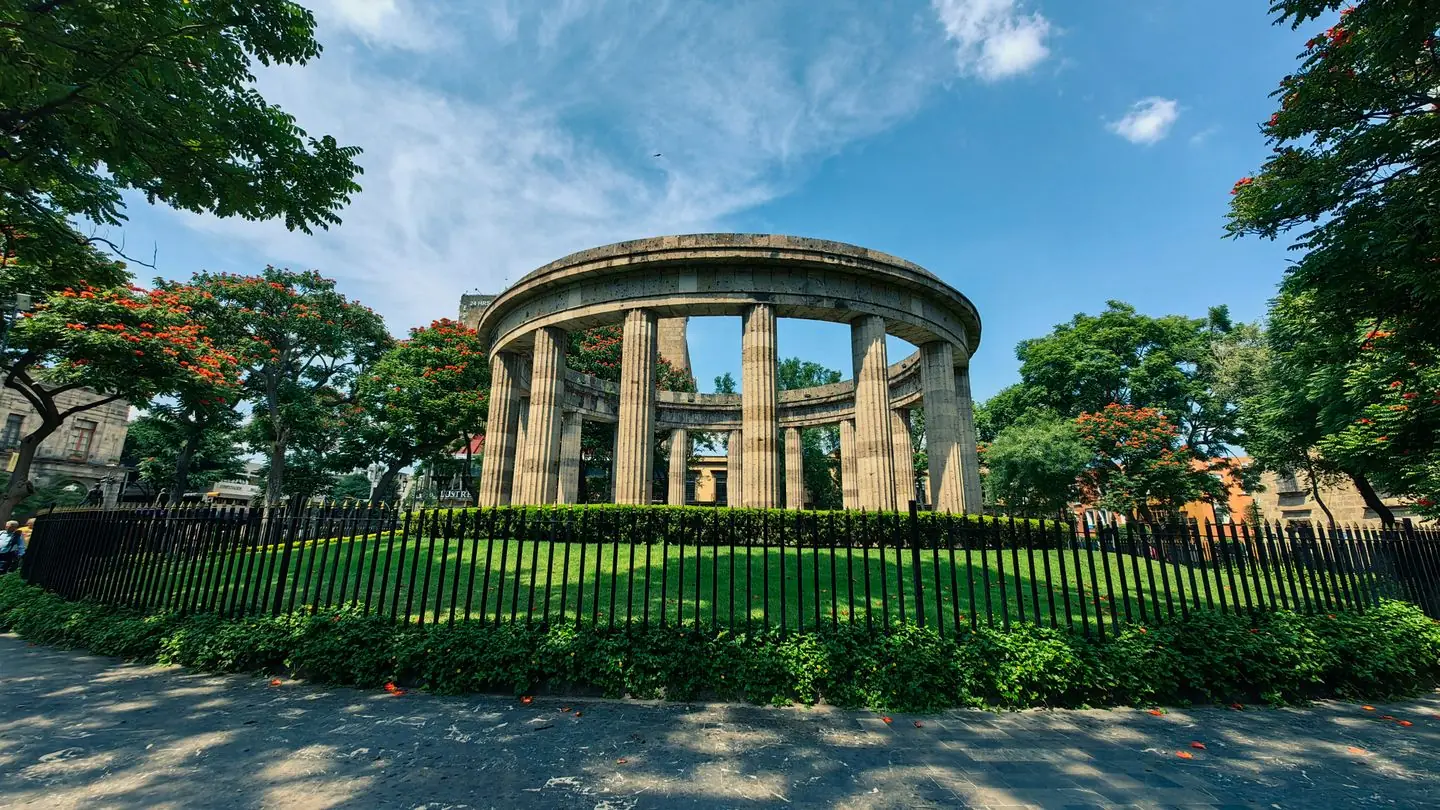
Before or after the exterior stop, cross Plaza de la Liberación towards the Cathedral and continue to the Rotonda garden if you want more walking. Keep Cabañas for another substantial visit unless you have deliberately left time for its murals and admission.
For a meal, Birriería Las 9 Esquinas offers goat birria and a tiled dining room in Las Nueve Esquinas, south of the theatre area. Make it a separate meal leg and check opening before relying on it around a show. If the performance starts early, eat with time to spare rather than arranging a rushed restaurant stop immediately before curtain-up.
Check before you go
Opening arrangements and visitor rules can change. Check the official information before your trip.